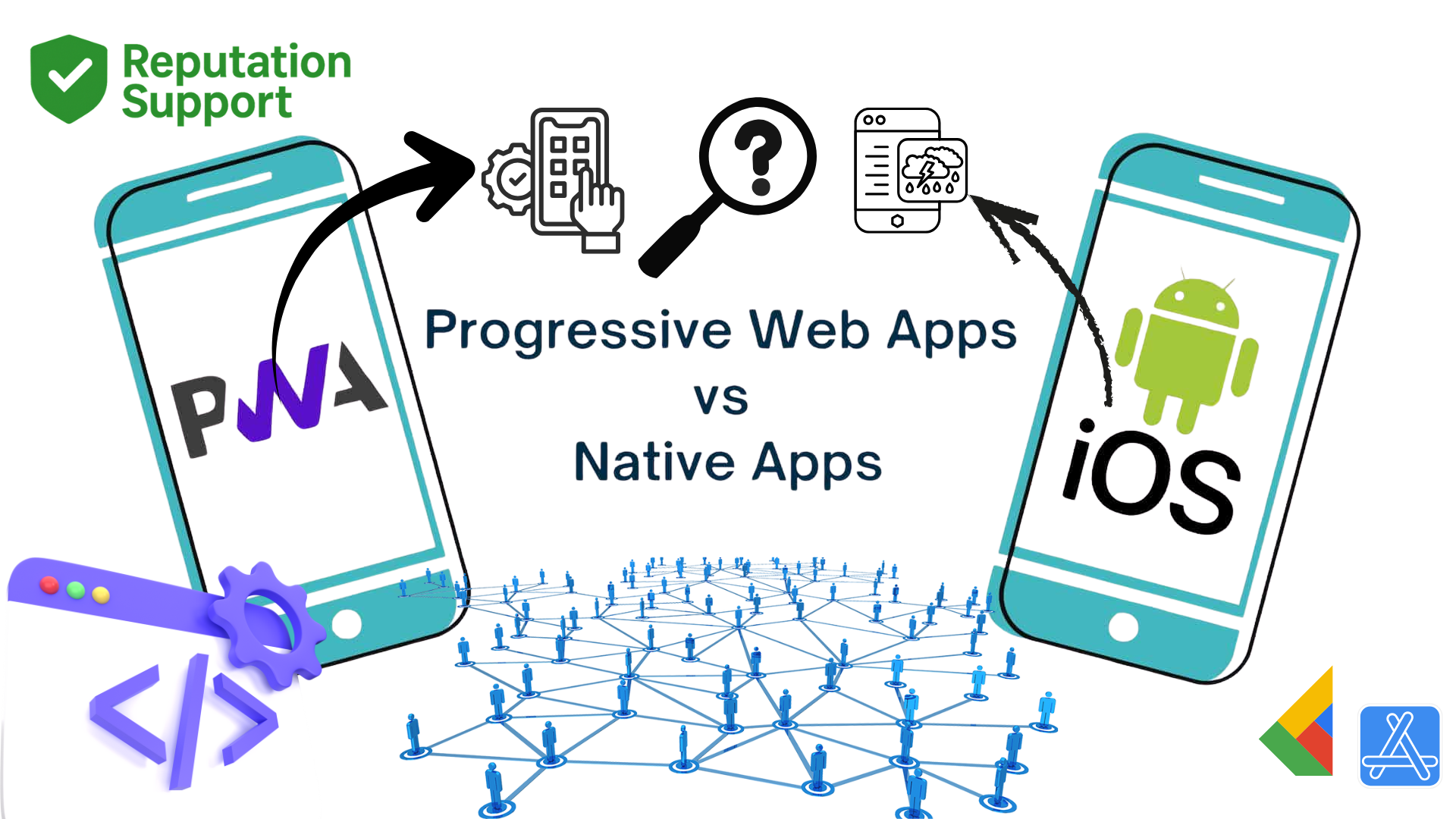
In today’s digital landscape, if your business isn’t optimized for mobile, you’re missing out on serious growth. But when it comes time to build that crucial application, every company hits a major fork in the road. Do you pour your resources into a Native App, the kind you download from an App Store or pivot toward a modern Progressive Web App (PWA)? Choosing between Native and PWA isn’t just a technical decision; it’s a strategic one that directly impacts your budget, how many people you can reach, your app’s performance, and the maintenance headaches you’ll have down the line.
Okay, choosing between Native and PWA isn’t just a technical decision; it’s a strategic one that directly impacts your budget, how many people you can reach, your app’s performance, and the maintenance headaches you’ll have down the line.
Key Takeaways
Progressive Web Apps (PWAs): Think of these as super-powered websites that act like an app. They’re fantastic for keeping development costs low, getting to market fast, and they’re easily found through Google Search (SEO).
Native Apps: These are the performance kings. They offer the absolute best access to your device’s features, like GPS, camera, and complex sensors, and enjoy the trust of the centralised ecosystem of the official App Stores.
If your priority is maxing out your reach with investment, you should go PWA. If you need complex functionality and top performance, Native is your list.
Understanding the Landscape: PWA Explained

What’s PWA? It’s essentially for a standard website, but turbocharged with modern web tech to deliver the look, feel, and speed of a traditional app. The kicker? Users can “install” it right onto their home screen without ever visiting an app store.
1. The Business Upsides
- Faster, Cheaper Development: Here’s the huge advantage: you only need one codebase (HTML, CSS, JavaScript) that works everywhere, iOS, Android, and Desktop. This slashes both your development cost and the time it takes to launch.
- SEO is Your Friend: Since a PWA is technically a website, search engines like Google can index it. Hello, organic traffic! You eliminate the friction of users having to search for you inside a closed App Store.
- Zero Install Friction: Users just click a URL, and they’re in. No need to download a massive file or navigate the App Store. Installation is literally a one-tap affair on their home screen.
- Updates are Invisible: The updates happen automatically on the server side. Your users always have the latest version without being prompted to download anything new. Seamless!
2. Where It Falls Short
- Limited Hardware Access: PWAs can’t always tap into all the cool stuff on a phone, like advanced Bluetooth, certain complex camera controls, or some deep background sync features, especially on iOS.
- Monetisation is Harder: You lose the built-in, trusted payment and distribution infrastructure that the App Stores provide for in-app purchases.
Native App: The Business Upsides

- Unmatched Speed and Performance: They are built to speak the device’s native language, resulting in an experience that is smoother, faster, and much more responsive.
- Full Hardware Integration: You get unrestricted access to every device feature: GPS, camera, microphone, fingerprint scanner, accelerometer the works.
- The Power of the App Store: Being in the store builds brand trust. It gives you a central, trusted place for distribution, payment (in-app purchases), and robust, powerful Push Notifications.
Native App: Where It Falls Short
- Expensive and Time-Consuming: The big drawback. You need two separate teams. One for iOS and one for Android which means twice the distinct codebases, a significantly higher initial investment and a longer development timeline.
Which One Should You Pick?
Your final choice boils down to your business priorities, depending on your budget and also the core function of the application.
| Priority Area | Choose PWA If… | Choose Native App If… |
| Budget & Speed | You need to get to market yesterday and your budget is tight. | Cost is a secondary concern to maximum performance and high-end functionality. |
| Reach & SEO | Your main goal is to get the maximum possible visibility via Google Search. | Your target audience primarily searches for and trusts the App Store ecosystem. |
| Functionality | The app is mainly about displaying information (e.g., a blog, news, basic e-commerce). | The app demands heavy use of advanced device features (e.g., AR, complex gaming, precise real-time GPS). |
| User Experience | You want a reliable, fast, and simple experience without forcing a lengthy App Store download. | You require the absolute best performance and seamless integration with the native OS interface. |
Shortly: Think about Pinterest or Starbucks (both use PWAs) their goal is fast, reliable content and broad access without the app store friction. Conversely, complex banking apps, advanced photo editors, or intensive games demand the power of a Native App.
Maintaining a Great Reputation
Whatever platform you choose, remember: your reputation is everything.
Engage with the Reviewer Directly
A prompt, courteous response can often diffuse a negative situation instantly. Take the time to genuinely investigate the issue, respond honestly, and always offer to take the conversation offline to find a detailed resolution.
Get That Wave of Positive Reviews
Don’t be shy actively ask your happy customers to leave reviews! Make the process incredibly simple by providing direct links or a QR code to your review pages like your Google Business Profile or App Store page. Highlighting positive testimonials on your website and social media channels is a great way to reinforce trust.
Proactively Protect Your Brand
The best defense is a great offense. Focus on building a culture of empathy and superb customer service. Train your staff to:
- Listen intently to every customer concern.
- Apologize sincerely, even if the issue wasn’t your fault.
- Correct the problem immediately, if possible.
Final Thoughts: Your Next Strategic Move
Let’s wrap this up. Deciding between a PWA and a Native App isn’t a small thing. It’s a fundamental strategic commitment for your business’s future.
Here’s the simplest way to look at it: If you’re focused on reaching the widest possible audience, keeping costs low, and leveraging the power of search engines (SEO) for an app that mainly delivers content or information, the PWA is your clear, modern choice.
The technology is only half the battle. The true, non-negotiable ingredient for long-term success is constantly prioritizing a flawless user experience while simultaneously running a robust, proactive campaign dedicated to stellar customer service and smart reputation management. Neglect that, and even the best app will struggle.
Start building your custom website today with Reputation Supports. Contact us at info@reputationsupports.com or call +1 213-548-0690. Our team of experienced developers and SEO experts is ready to help you succeed.
Burning Questions Answered (FAQ)
Q: If I’ve already built a Native App, can I just convert or switch it over to a PWA later on?
A: Not really, no. Unfortunately, it’s not a simple conversion process. Because these two technologies use completely different code languages and frameworks, you would essentially have to rebuild the core functionality from scratch using standard web technologies like HTML, CSS, and JavaScript. For many companies, having both a Native App and a PWA running side-by-side ends up being the most sensible, budget-permitting strategy.
Q: Does having a Native App in the App Store actually help my SEO on Google?
A: It’s an indirect help, at best. The Native App itself is housed within a closed ecosystem, meaning Google Search doesn’t index its content directly. However, having a successful app with thousands of positive ratings does wonders for your brand authority and trustworthiness. But if your main goal is organic search discoverability and driving traffic straight from Google results, PWAs are undeniably the superior tool.