Forget what you’ve been told about instant success. If you’re running on Google Ads, you’re effectively sailing a rented boat. Sure, you get across the water fast, but the moment the fuel in your budget runs out, you’re stranded. You’re stuck in the costly cycle where visibility is guaranteed only as long as you keep writing big checks. Your Google Ads budget is a trap because those clicks never build equity . This is why your business needs to switch strategies. The debate between “pay-to-play” and long-term investment is over SEO vs Google Ads. The only way to own your digital destiny and achieve real stability is through Organic SEO (Search Engine Optimization). SEO is the difference between renting a boat and building a permanent, revenue-generating lighthouse. This choice isn’t just about where you spend your marketing funds. It’s a strategic decision that impacts your long-term viability, customer trust, and ultimately, your financial freedom from the advertising treadmill.
At Reputation Supports, we guide businesses off that expensive treadmill.
Key Takeaway
- Google Ads (PPC): Thinking and renting prime real estate. It offers immediate visibility, guaranteed traffic volume also excellent control over targeting. Ideal for quick promotions or testing new markets.
- Organic SEO (Content & Rankings): This is building and owning your digital property. It requires patience and investment upfront, but results in perpetual, high-quality, and highly trusted traffic that keeps flowing long after the initial work is done.
So you understand, Paid ads are a powerful accelerator, but Organic SEO is the reliable engine that determines how far you can travel. You need a mix, but never rely solely on renting.
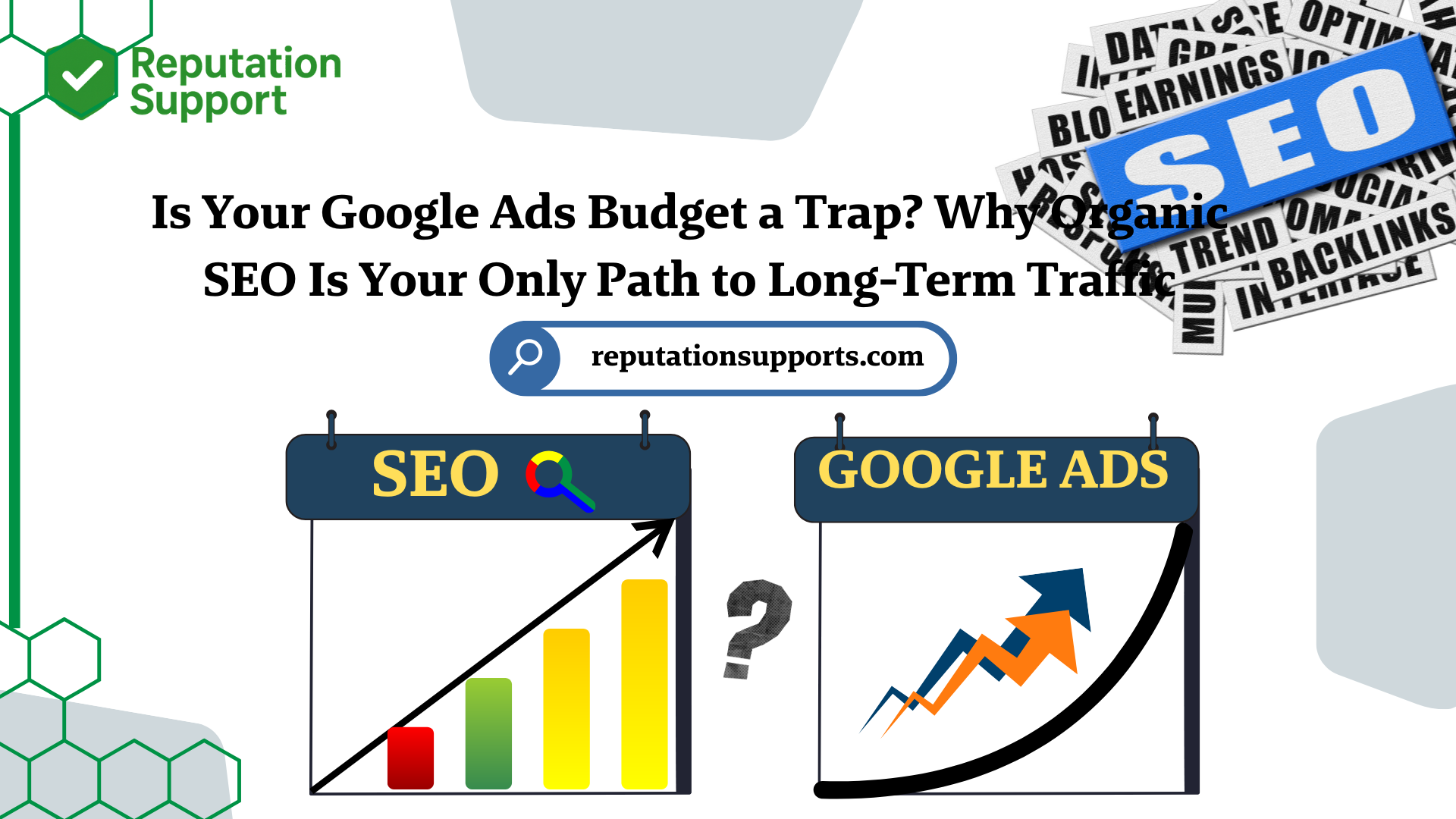
SEO vs Google Ads
Pay-per-click delivers instant traffic, but those clicks never build long-term value. SEO takes time, yet the traffic you earn is free, sustainable, and comes with a much higher level of customer trust. Choose wisely: rented visibility or owned authority?
Understanding Paid Advertising (PPC) Explained
PPC advertising, primarily through platforms like Google Ads, allows you to bid on keywords to show up instantly at the very top of the search results page. Now, here I give you 2 mejores options to describe you

1. For The Business Upsides
- Immediate Visibility and Speed: When you start your campaign in Google, you get instant traffic the moment your goes live. This is fantastic for seasonal offers, flash sales, or quickly validating a new product idea.
- Hyper-Focused Targeting: You have incredible control over who sees your ad by location, time of day, device, and even their past browsing history. This makes the marketing highly efficient for niche audiences.
- Budget Control: You set the daily limit. You know exactly what you’re spending, and you can pause it instantly. There’s no ambiguity about the cost.
2. Where It Falls Short
- The Ticking Clock Problem: The traffic stops immediately when your budget runs out. You are constantly paying rent for clicks, creating a never-ending expense.
- Erosion of Trust: Many savvy users inherently skip the ads. They recognize the “Ad” label and often prefer to click on the organic Results, believing them to be more authoritative.
- Constantly Rising Costs: As your competition recognizes the value of a keyword, the bidding price Cost Per Click, or CPC constantly increases, pushing your costs higher over time.
Understanding Organic SEO Explained
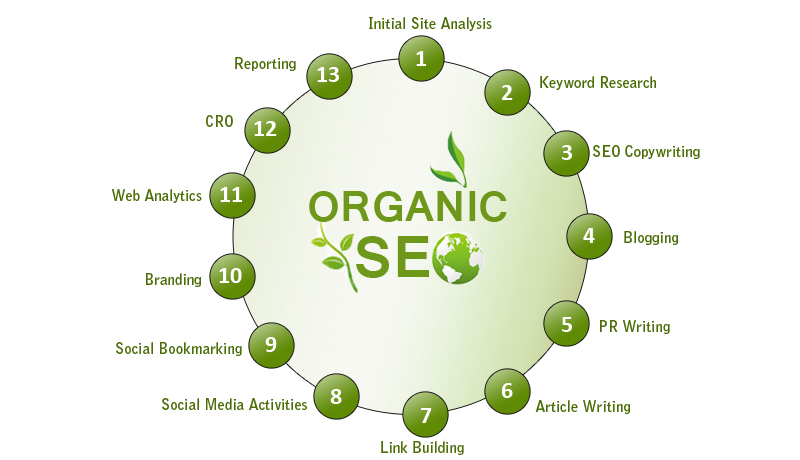
Organic SEO is the strategic process of optimizing your website and content to rank naturally in search engine results. It involves technical optimization, quality content creation, and building authority through backlinks.
SEO: The Business Upsides
- Sustainable Traffic: You invest time and resources upfront, but once you rank, the traffic is essentially free. Your content works for you 24/7, generating traffic and leads years down the line. No any running ads for this.
- The Trust and Authority Factor: Ranking organically signals to users that Google considers you the most relevant authority for a given query. This inherently builds deeper customer trust. Automatically reach visitors, customers when they search for your related content or topic.
- Higher Click-Through Rate (CTR): Studies consistently show that organic results, especially those ranking in the top three positions, receive a significantly higher percentage of clicks compared to paid ads.
- Scalable Growth: Your SEO efforts impact your entire website, not just one keyword. Good SEO makes your whole site faster, safer, and more authoritative, benefiting every page you create.
SEO: Where It Falls Short (The Patience Factor)
- Patience is required: SEO is a marathon a along tram way, if you dont have any patience not a sprint. It can take anywhere from 6 to 12 months to see significant ranking improvements, especially in competitive industries.
- Requires Constant Work: Search engine algorithms frequently change. You must consistently maintain, update, and improve your content and technical site health etc.
Comparing the True ROI: Renting vs. Owning
The decision hinges on your long-term business goals and how you define success. True ROI isn’t just about clicks it’s about the longevity and cost-efficiency of that traffic. here –
| Feature | Paid Ads (PPC) | Organic SEO |
| Speed to Results | Immediate (Minutes/Hours) | Slow (Months) |
| Cost Model | Pay-to-Play (Expense) | Build-to-Earn (Investment) |
| User Trust Level | Lower (Often Skipped) | High (Perceived as Authority) |
| Cost Over Time | Rises constantly as competition increases. | Decreases dramatically over time; traffic becomes ‘free.’ |
| Traffic Longevity | Stops the instant budget hits zero. | Continues perpetually; traffic is owned. |
Advice: If you have an immediate need to drive sign-ups for an event next week, use Ads. If you want your business to be the industry standard on Google five years from now, you must invest in SEO.
Maintaining a Strategic and Balanced Approach
The most successful businesses don’t choose one over the other; they use them strategically together.Remind it.
Use Ads for Validation and Acceleration
- Test Keywords: Use a small paid campaign to quickly see which keywords actually convert, then dedicate your SEO efforts to organically ranking for those proven winners.
- Fill Gaps: Use ads to rank for keywords where your organic ranking is still low, effectively bridging the gap while your SEO work matures.
- Remarketing: Target users who have already visited your site with highly relevant ads.
Double Down on Organic for Stability
- Content Authority: Publish comprehensive, expert content that answers complex customer questions. This builds trust and positions you as a thought leader.
- Technical Health: Ensure your website is technically flawless, fast, and secure. This is the foundation that Google rewards.
- Reputation Management: Strong organic presence ties directly into your reputation. When you own the top search results, you control the narrative.
Summary: Stop Renting, Start Owning
If your marketing budget feels like a budget sinkhole money poured in with nothing left over when you stop you are relying too heavily on paid advertising. The strategic commitment is to transition your resources into Organic SEO. It takes time, yes, but the payoff is a stable, highly-trusted, and perpetually generating traffic source that is exponentially more valuable than rented clicks.The real key to sustainable growth is running a parallel strategy: using Ads strategically while building your fortress with comprehensive SEO.
Start your business with SEO or Google ADS today with Reputation Supports. Contact us at info@reputationsupports.com or call +1 213-548-0690. Our team of experienced developers and SEO experts is ready to help you succeed.
Frequently Asked Questions (FAQ)
Q: Should a brand-new website focus on Ads or SEO first?
A: You should start SEO work immediately, as it takes time to mature. However, if you need immediate sales or traffic to test product-market fit, running a targeted Ad campaign alongside your foundational SEO work is the smartest way to start generating revenue while you wait for organic rankings to kick in.
Q: Does spending a lot on Google Ads help my organic ranking?
A: Unfortunately, no, not directly. Google maintains a strict separation between its paid advertising platform and its organic ranking algorithm. However, an indirect benefit exists: Ads bring traffic, and if that traffic engages well with your site (low bounce rate, long time on page), it sends positive signals to Google that your site is valuable, which can indirectly help SEO.
Q3: How do I calculate the true ROI for Organic SEO?
A: Calculating SEO ROI is tricky but essential. You track two main metrics: 1) The dollar value of your organic traffic (what would it cost you to buy that traffic via PPC?), and 2) The cost per acquisition (CPA) from organic leads compared to PPC leads. Typically, the CPA from organic traffic is significantly lower over the long term.
Q4: Is it true that people click on organic results more than ads?
A: Yes, generally. While paid ads dominate the very top of the page, the user intent for clicking organic results is often higher because the searcher perceives those results as the most credible answer, leading to a higher long-term CTR for top organic listings.
Q5: What’s the biggest risk of ignoring SEO and only doing ads?
A: The biggest risk is the lack of brand authority and dependency. You are entirely dependent on Google’s platform and competitive bidding. If Google changes its policies, if competitors raise their bids, or if your budget dries up, your traffic instantly goes to zero, leaving your business vulnerable.